
Opportunity Zone 2.0: New Rural Incentives Open for Lamar County Investors
The Opportunity Zone program just got permanent, and rural communities like Paris just got a new weapon: a 30% basis step-up for investors who commit capital for five years or more.
The One Big Beautiful Bill Act (OBBBA), signed into law on July 4, 2025, permanently extended the federal Opportunity Zone program and introduced a significant new incentive structure specifically designed for rural areas. Among the most impactful changes is the creation of the Qualified Rural Opportunity Fund (QROF), which offers investors a 30 percent basis step-up for capital gains invested in designated rural Opportunity Zones and held for at least five years. For investors considering Paris, Texas — a city of approximately 25,000 in Lamar County — these new provisions could materially enhance the tax-advantaged returns already available under the original OZ framework.
The OBBBA defines a "rural area" for QROF purposes as any city or town with a population of less than 50,000, excluding census tracts adjacent to larger urbanized areas. Paris, with its population of roughly 25,000, falls squarely within this definition. Beginning July 1, 2026, state officials will commence the process of nominating new census tracts for Qualified Opportunity Zone designation under the revised framework, which will determine future eligibility for the enhanced rural incentives.
What changed under the OBBBA
The original Opportunity Zone program, established by the Tax Cuts and Jobs Act of 2017, allowed investors to defer and reduce capital gains taxes by investing through Qualified Opportunity Funds. The OBBBA made the program permanent — eliminating the uncertainty that had clouded the program's future — and added several new provisions:
- Rural QROF designation: A new fund category for rural areas with enhanced incentives, including a 30% basis step-up after a five-year hold.
- Permanent authorization: The program no longer has an expiration date, giving investors long-term certainty.
- New tract nominations: States begin nominating new census tracts on July 1, 2026, potentially expanding eligible areas within Lamar County.
- 10-year appreciation exclusion: Any appreciation on a QOF or QROF investment held for 10 years is entirely tax-free.
The 30 percent basis step-up is particularly significant. Under the original program, investors received a step-up in basis equal to 10 percent after a five-year hold. The new rural QROF triples that benefit, making a five-year commitment to a rural Opportunity Zone investment substantially more attractive from a tax-planning perspective.
Why Paris qualifies — and why it matters
Paris, Texas, is the county seat of Lamar County, with a population of approximately 25,000. The city is not adjacent to any urbanized area with a population exceeding 50,000 that would disqualify it under the rural area definition. Lamar County already contains designated Opportunity Zone census tracts, and the new tract nomination process beginning in July 2026 could expand or reaffirm the county's eligibility under the revised framework.
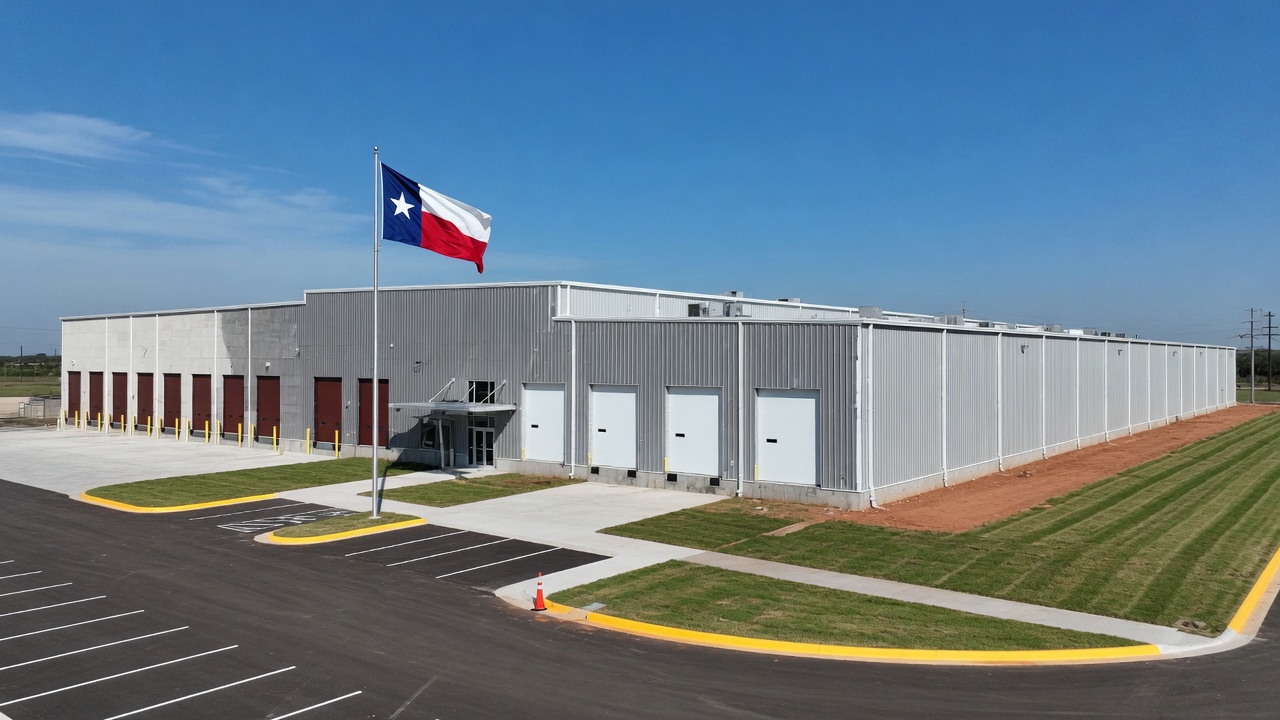
For investors, the combination of existing OZ designation and potential QROF eligibility creates a dual-layer tax advantage. A property like 1905 E Price St, located within a designated Opportunity Zone tract, can be held through a Qualified Opportunity Fund that captures both the original OZ deferral benefits and the new rural QROF basis step-up. The result is a tax structure that reduces the effective cost basis of the investment while providing a path to entirely tax-free appreciation after a 10-year hold.
The investment calculus
Consider the math: an investor deploys $1 million in capital gains through a QROF into a Paris commercial property. After five years, the basis step-up reduces the taxable amount by 30 percent. After 10 years, any appreciation on the investment — whether from lease income, property value growth, or both — is excluded from taxable income entirely. Combined with the property's estimated 10 percent cap rate, the effective after-tax return profile is substantially more attractive than a comparable investment in a non-OZ market.
The new rural provisions also level the playing field between Paris and larger metro Opportunity Zones, which have historically attracted the majority of OZ capital due to their scale and perceived lower risk. By tripling the basis step-up for rural investments, Congress has explicitly incentivized capital flow to smaller communities — exactly the kind of market where Paris's fundamentals (steady growth, diversified employment, infrastructure investment) support strong risk-adjusted returns.
Source: EisnerAmper, "One Big Beautiful Bill Impacts on QOZs," July 2025. IEDC, "Opportunity Zone Program Overhaul Made Permanent in the One Big Beautiful Bill Act," August 2025. Adams and Reese, "Key Changes to the Opportunity Zone Program in 2025." IRS, "Treasury, IRS provide guidance to States for nominating census tracts as Qualified Opportunity Zones under the One Big Beautiful Bill." RSM US, "The OBBBA rekindles opportunity zones."
Disclaimer: This summary is for informational purposes only and does not constitute tax, legal, or investment advice. Opportunity Zone eligibility depends on specific census tract designations that may change under the new tract nomination process. Consult a qualified tax advisor or attorney before making investment decisions based on Opportunity Zone incentives.
Visit
Model the tax advantage in person.
The OZ and QROF structures are powerful — but the property is what makes them work. Tour the site and let us map the investment opportunity.
Schedule a consultation